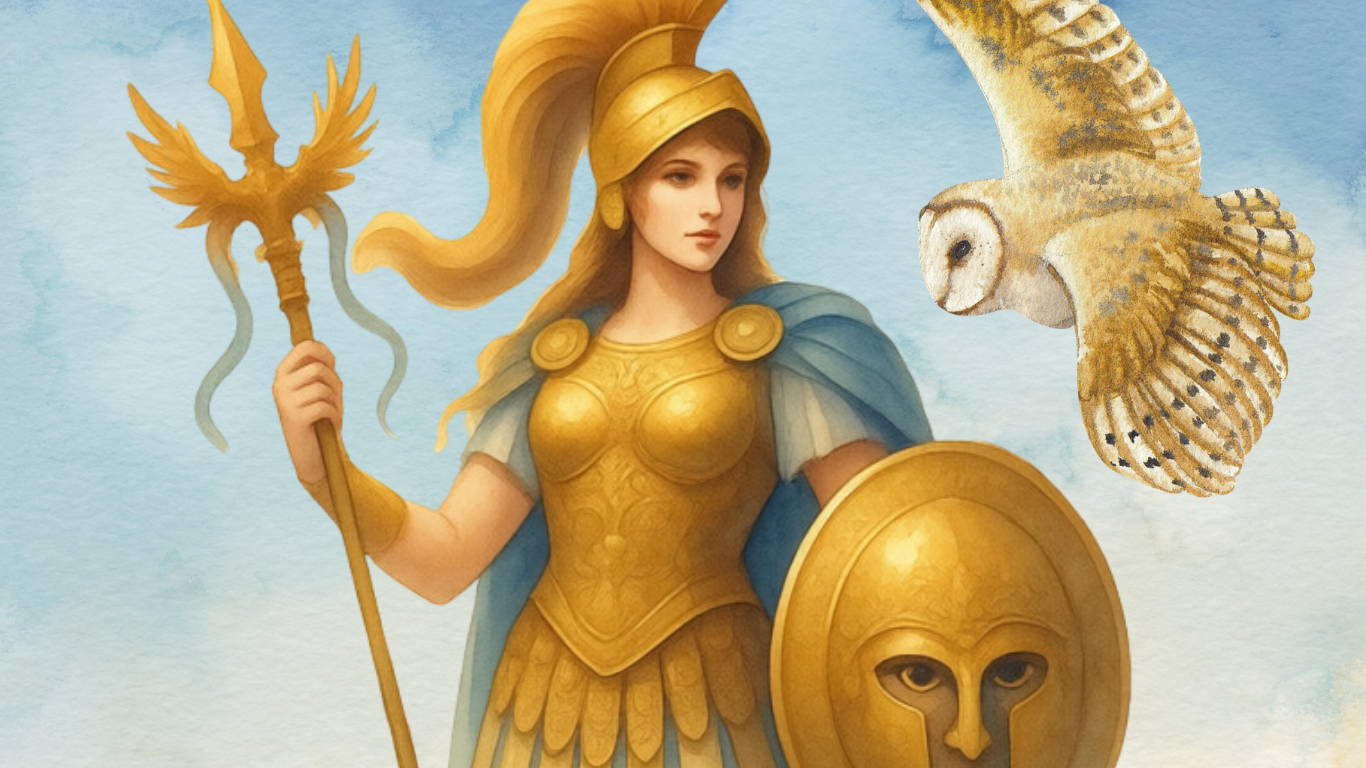
Formally known as the Order of Knowledge, is one of four Orders of the Tetrad Concordance and is responsible for responsible for education, archives, civil recordkeeping, and the preservation and development of accepted truth throughout Pnereth.
Pronunciation: (SOF-on-teez)
Category: Peoples and Cultures; Governance and Institutions; Faith and Doctrine
Classification: Concordance Order (CO-02)
Archived: Missives from Pnereth #5
Glossary Encyclopedia:
Common Definition:
The Sophontes, formally known as the Order of Knowledge, are one of the four Orders of the Tetrad Concordance and serve as the principal custodians of education, scholarship, archives, and the accepted historical record throughout the four Concord nations.
Their influence extends from provincial classrooms to the highest levels of Concord governance. Sophontes teach, preserve records, conduct research, maintain libraries, document populations and borders, survey the realm, administer communications, and provide the scholarship upon which the other Orders frequently depend. While the Ortharcs and Horisto maintain more specialized judicial and regulatory functions, Sophontes often serve as the administrative and scholarly intermediaries connecting those institutions with the provinces.
The Order is divided principally between two traditions: Grammats, responsible for records, research, archives, and scholarly civil service; and Didaskals, responsible for education and instruction. Together, they constitute the largest and most publicly encountered body of the Concord’s four Orders.
Historical Context:
The modern Sophontes were established with the Tetrad Concordance in 4160 Tissian Era, but their institutional philosophy was profoundly shaped by the Burning of Venna sixty years earlier.
Before the Mortal War, Venna stood among the greatest centers of scholarship in Pnereth. Its collections included important early Sophontes and Horisto archives, historical records, magical scholarship, and competing theories concerning the nature and use of magic.
In 4100 TE, the God-King Owin Aurelias marched upon Venna during his campaign to seize Gnostos and its access to the aetherglass of Starweave. When the King of Gnostos refused to submit, Owin enclosed the city behind a wall of water and burned its interior. The fire consumed libraries, historical collections, and scholarly records alongside those who remained within the city, destroying an irreplaceable concentration of pre-war knowledge.
The Burning did not erase the entirety of Pnereth’s historical record. National archives, private collections, religious institutions, provincial repositories, and individual scholars retained records of their own. Nevertheless, the destruction demonstrated how easily generations of accumulated knowledge could disappear when concentrated within a single place.
When the Concord was established after the Mortal War, preservation therefore became inseparable from governance. A centralized authority over magic required not only law and regulation, but reliable records, shared scholarship, consistent education, and an institutional memory capable of surviving political upheaval. The Sophontes became that authority.
Over the following three centuries, their responsibilities expanded far beyond the archive. The Order developed educational standards across the Concord nations, established systems of census and survey, supported the work of the Ortharcs and Horisto, maintained official histories, and created a scholarly infrastructure connecting provincial institutions with Sentra.
At the center of that system stands the Halls of Aura, the great academic citadel of Hallward and the principal seat of Sophontes scholarship.
Archivist’s Note: The Burning of Venna should not be interpreted as the destruction of all surviving knowledge predating the Mortal War. National archives, provincial collections, private libraries, sacred institutions, and individual records survived throughout Pnereth. The Hall of Record encourages the submission of such materials for authentication, documentation, and duplication, but not all surviving records have entered Concord custody, nor are original materials required to be surrendered by their holders.
Roles and Branches:
The Sophontes are divided principally between the Grammat and Didaskal branches, supported by numerous specialized disciplines and services.
High Archon of Sophontes/High Sophontes
The High Sophontes is the supreme authority of the Order and one of the Five High Archons possessing voting authority within the Tetrad Concordance.
The High Sophontes oversees the Concord’s educational and scholarly institutions, accepted doctrine, archives, research, and preservation of the official historical record. The office also mediates between the Grammat and Didaskal traditions and represents the interests of scholarship and education before the wider Concord.
Candidates for High Sophontes are nominated by Senior Grammats and Senior Didaskals. Final selection is made by an election committee consisting of the First Grammat, First Didaskal, and the remaining four High Archons, each possessing an equal vote. A candidate must receive four of the six votes to be selected.
Current High Sophontes: Saventill “Savi” Zarethi, 4198 TE–present.
Born in 4036 TE, Savi is the oldest recorded living person in Pnereth. She was already serving as a Didaskal at the time of the Burning of Venna and survived while assisting in the evacuation from the city. Her life consequently spans the destruction of the pre-war scholarly world, the Mortal War, the founding of the Concord, and more than two and a half centuries of modern Concordance scholarship.
Grammats
The First Grammat is the highest-ranking authority within the Grammat branch and oversees the Concord’s archival and recordkeeping systems, including the Hall of Record. The office is responsible for preservation standards, archival administration, classification practices, and the vast scholarly bureaucracy through which Concord information is collected and maintained.
Grammats constitute the recordkeeping, research, and administrative tradition of the Sophontes. Their professions include archivists, librarians, historians, scribes, researchers, census keepers, surveyors, cartographers, genealogical recordkeepers, translators, Skythread communications officials, and other scholarly civil servants.
Many Grammats work directly alongside Ortharcs and Horisto, providing the documentation, research, surveying, transcription, and provincial coordination required by those more specialized Orders.
Ranks within the branch include Senior Grammats, Field Grammats, Probationary Grammats, and Trainees, with additional specialization determined by profession.
Didaskals
The First Didaskal is the highest-ranking authority within the educational branch of the Sophontes. The office oversees teaching standards, curriculum, instructor training, and the broader educational system operating throughout Concord territory.
Didaskals are the teachers and educational specialists of the Sophontes. Their responsibilities range from foundational literacy and mathematics in provincial schools to advanced magical instruction and scholarly specialization within the Halls of Aura.
Didaskals are generally classified according to the level at which they are qualified to teach:
- Primary Didaskals provide foundational education and are commonly trained within provincial teaching institutions.
- Secondary Didaskals receive more advanced training and may begin their education provincially, but complete a final residency within the Halls of Aura.
- Tertiary Didaskals train exclusively within the Halls and teach the most advanced levels of scholarship and magical study. Their education is highly specialized, particularly within elemental-affinity disciplines.
These classifications describe educational specialization rather than a simple ladder of seniority.
Training and Appointment:
Sophontes training follows two principal pathways depending upon profession and educational specialization.
Provincial Didaskal Training
Primary Didaskals may complete their training within approved provincial institutions located throughout the Concord nations, particularly in major cities and national capitals. These facilities provide standardized instruction while allowing the considerable number of teachers required throughout Pnereth to be educated without traveling to Sentra.
Secondary Didaskals may likewise begin their training provincially. Their final year, however, requires residency within the Halls of Aura, where they receive advanced instruction and standardized doctrinal training before receiving full qualification.
The Halls Track
Grammats and Tertiary Didaskals undergo their primary professional training at the Halls of Aura in Sentra. Admission is highly competitive. Approximately 2,000–2,500 new Sophontes students are admitted to Halls-level study each year, with approximately 8,000–10,000 enrolled across the four-year program at any given time. A typical incoming class includes approximately 1,400 Grammats and 800 Didaskals.
Humans and Deoi alike are eligible for admission. Of the four Concord Orders, the Sophontes maintain the largest human membership, particularly within the Grammat tradition.
Advanced Didaskal training is considerably more magically demanding. Tertiary candidates specialize according to discipline and, where applicable, elemental affinity. They undergo Desmos during their education and frequently participate in Trialbounds as part of their advanced preparation.
Admission to the Halls follows a prolonged series of Appraisals, interviews, branch review, and faculty sponsorship intended to assess not only existing aptitude, but a candidate’s ability to respond to criticism and develop as a scholar. Successful enrollment does not guarantee continued placement. Students undergo a Final Appraisal after their first year and may lose their position if they fail to demonstrate sufficient progress.
Full admission procedures and academic organization are maintained separately within the records of the Halls of Aura.
Authority and Responsibility:
Sophontes authority extends across education, scholarship, historical preservation, and the administrative systems required to maintain a unified body of Concord knowledge.
The Sophontes is formally responsible for:
- educational standards throughout Concord territory;
- training and qualification of Didaskals;
- administration of advanced magical and scholarly education;
- preservation and authentication of historical records;
- maintenance of Concord archives;
- documentation of treaties, judgments, and institutional proceedings;
- census and demographic records;
- cartographic and geographical surveys;
- genealogical records, including documented Deoi bloodlines;
- linguistic translation and preservation;
- scholarly research;
- development and preservation of accepted doctrine;
- and administration of major information and communications systems.
Sophontes scholarship frequently informs decisions made by the other Orders.
When the Horisto investigate a changing aetherwell, Grammats may provide historical measurements, conduct surveys, document findings, and coordinate records with the affected province. When an Ortharc issues a precedent-setting judgment, Grammats preserve the decision and incorporate it into the legal record used in future proceedings.
The Sophontes therefore possess comparatively little direct enforcement authority. Their influence derives instead from the collection, preservation, distribution, and institutional recognition of information.
The Halls of Aura (Excerpt):
The Halls of Aura are the principal academic and scholarly institution of the Tetrad Concordance and the central seat of Sophontes education. Located in Hallward, Sentra, the Halls form a vast self-contained citadel accessible from both the mainland city and the Citadel.
The Grand Library stands at its center, surrounded by four principal wings:
- Hall of Record (Northwest): archives and historical preservation
- Hall of Instruction (Southwest): teaching, lecture spaces, magical theory, and foundational academic training
- Hall of Practice (Northeast): applied research, spell development, enchantment, alchemical experimentation, and protected experimental courts
- Hall of Doctrine (Southeast): advanced magical scholarship, including elemental mechanics, aether theory, enchantment design, and artifact study
The Halls also serve as an important training institution beyond the Sophontes themselves, particularly for advanced Horisto scholarship.
Relationship with Other Orders:
The Sophontes maintain perhaps the broadest routine interaction with the other Orders because their records, research, education, and administrative systems support much of the Concord’s daily operation.
Ortharcs depend upon Sophontes archives, authenticated records, historical scholarship, and preserved precedent when interpreting Concord law. Grammats document major judgments and maintain the resulting legal record. Ortharcs may order particular records restricted through judicial authority, but preservation and archival custody remain Sophontes responsibilities.
Horisto work extensively alongside Grammats in magical research, surveying, aether stewardship, and documentation. While Horisto possess the specialized authority to determine safe limits and regulations surrounding magical practice, Sophontes frequently provide the personnel and administrative infrastructure through which their findings are recorded and communicated. The Halls of Aura likewise provide advanced scholarly training relevant to Horisto service.
Mantissa contribute knowledge that cannot be produced through ordinary scholarship: visions and communication attributed directly to the divine. Sophontes preserve the resulting records and historical interpretations, while the Mantissa retain authority over the reception and prophetic interpretation of such revelation. Sensitive prophetic materials may be restricted at Mantissa request but remain within Sophontes archival custody.
The Sophontes possess no authority to replace the specialized judgment of the Ortharcs, magical regulation of the Horisto, or divine interpretation of the Mantissa. Their power lies elsewhere. They preserve the information from which each of those institutions works, educate the people who will one day enter them, and maintain the record by which Pnereth remembers what those institutions have done.

Related Entries:
Horisto | Mantissa | Ortharcs | Skythread | Tetrad Concordance

Leave a Reply